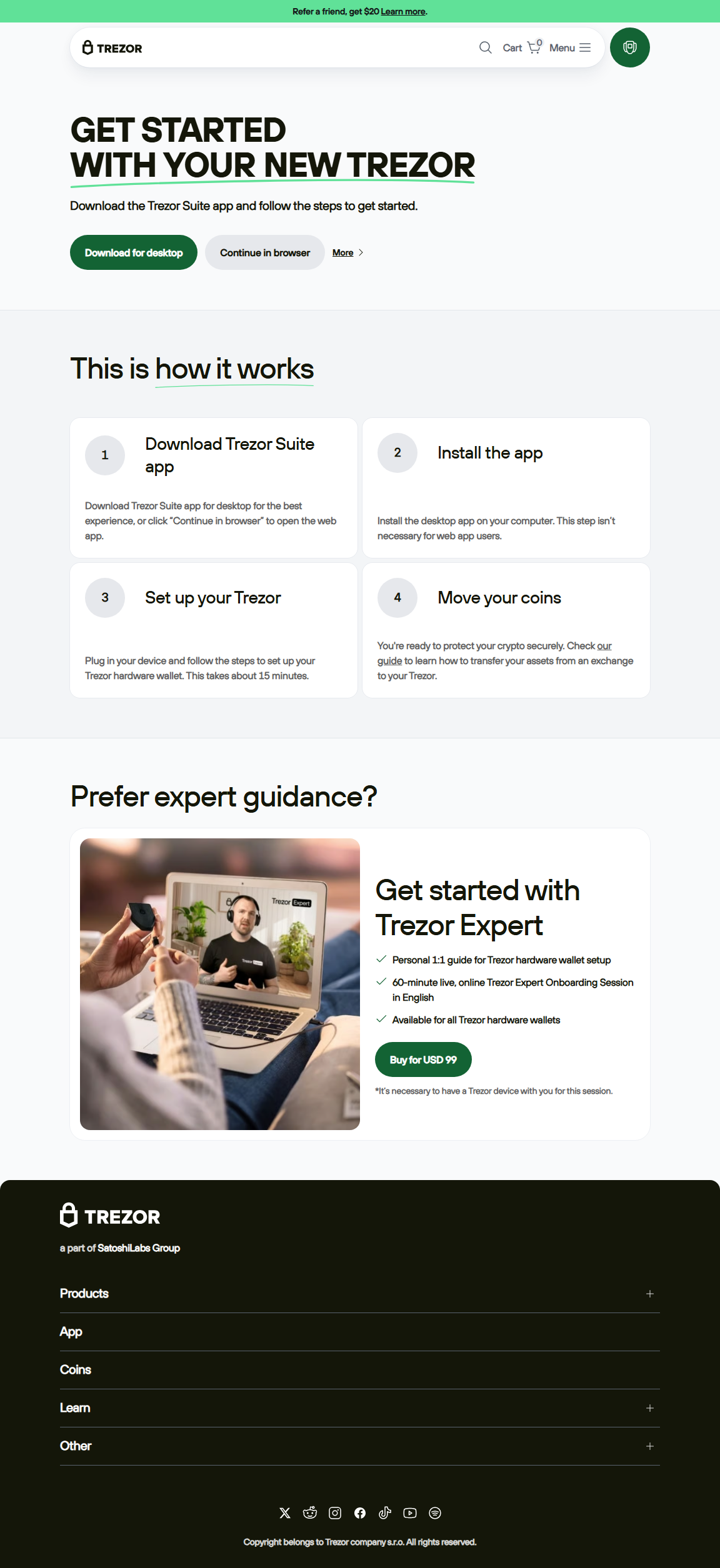
Trezor Login – Your Ultimate Guide to Secure Crypto Access
Learn how to safely access your Trezor wallet, avoid common pitfalls, and protect your cryptocurrency with advanced login security.
🌐 What is Trezor Login?
The Trezor login process is how you securely connect to your Trezor hardware wallet — a physical device that stores your private keys offline. Unlike browser wallets or exchange accounts, Trezor ensures your crypto credentials never leave the device, meaning even if your computer is compromised, your funds stay safe.
When you log in, Trezor verifies ownership through PINs, optional passphrases, and cryptographic signatures. It’s not a traditional “username-password” system — it’s a form of hardware-level authentication that gives you full control of your Bitcoin, Ethereum, and thousands of supported coins.
🔒 Secure by Design
Trezor never exposes your private key to the internet. Every transaction is signed directly on the device, keeping your crypto safe even if your computer is infected with malware.
🧠 User-Friendly Interface
With Trezor Suite, you can easily manage your portfolio, track your balance, and send or receive crypto — all while your private keys stay offline inside your Trezor device.
🧭 Step-by-Step: How to Log In to Your Trezor Wallet
- Connect your Trezor: Plug in your Trezor device using the provided USB cable.
- Open Trezor Suite or go to Trezor.io/start: This official interface ensures your login remains secure.
- Enter your PIN: Use the randomized grid displayed on your computer screen to input your PIN on your Trezor device.
- Optional: Enter your passphrase: A passphrase adds an extra security layer by creating an entirely new wallet hidden behind your primary one.
- Access your dashboard: Once verified, your crypto portfolio appears instantly — ready for management.
🧰 Why the Trezor Login Process is Different
Most online wallets rely on centralized login systems that store passwords on servers — making them vulnerable to hacks. Trezor flips this model by removing the internet from the equation entirely. Your keys remain within the device’s secure environment, and every authentication step happens locally.
Even advanced phishing attacks can’t trick Trezor into revealing your seed or signing fake transactions without your physical confirmation. This design makes Trezor one of the safest crypto management tools in the market.
⚖️ Comparison Table: Trezor vs. Other Wallets
| Feature | Trezor | Ledger | Software Wallet |
|---|---|---|---|
| Private Key Storage | Offline (Hardware) | Offline (Secure Chip) | Online (Risky) |
| Open Source | ✅ Yes | ❌ No | Partial |
| Ease of Use | Very High | Moderate | High |
| Multi-Coin Support | 1000+ assets | 1800+ assets | Depends on wallet |
🧠 Understanding PIN and Passphrase
Your Trezor PIN is a randomized grid system that protects your wallet from unauthorized access. Each login displays a different keypad layout, making it impossible for malware to record your inputs accurately.
The passphrase acts as a secondary password that can unlock different wallets from the same recovery seed. Think of it as a secret “door” that only you know exists — even if someone steals your seed phrase, they can’t access the hidden wallet without the passphrase.
📚 FAQ: Common Questions About Trezor Login
Q1: What happens if I lose my Trezor device?
You can restore your wallet using the 12-, 18-, or 24-word recovery seed you wrote down during setup. Always keep this seed offline and secure.
Q2: Can I access Trezor from my phone?
Yes, Trezor supports mobile access through certain Android devices via OTG cable. However, desktop use with Trezor Suite is recommended for maximum security.
Q3: Is it safe to log in to Trezor through a browser?
Yes, but always verify the URL. The only legitimate domain is suite.trezor.io. Avoid any lookalike websites or links shared on social media.
Q4: Does Trezor store my crypto?
No, your crypto remains on the blockchain. Trezor only secures your private keys — your access to the blockchain — meaning you remain the true owner of your funds.
⚠️ Important Security Reminder
Never enter your recovery seed or passphrase on any website. If any platform asks for it, it’s a scam. The only time you should use your recovery seed is when restoring a new or wiped Trezor device — offline.
🛡️ Advanced Login Safety Tips
- Keep your Trezor firmware up to date to avoid vulnerabilities.
- Use a unique passphrase that only you remember.
- Always confirm wallet addresses directly on the device screen before sending funds.
- Enable Tor mode within Trezor Suite for enhanced privacy.
- Regularly back up your recovery seed and store it offline in multiple secure locations.
🏁 Conclusion: Trezor Login as Your Key to Crypto Security
The Trezor login experience redefines how we access and protect cryptocurrency. It eliminates the weaknesses of online authentication systems by replacing them with device-based verification and encryption. Whether you manage a few tokens or a diversified crypto portfolio, Trezor provides peace of mind through uncompromising security.
By understanding how to properly log in, safeguard your PIN, and handle your recovery seed, you’re not just using a wallet — you’re building your personal fortress for digital wealth. In the ever-evolving landscape of cryptocurrency, Trezor login stands as a symbol of trust, transparency, and total financial ownership.